
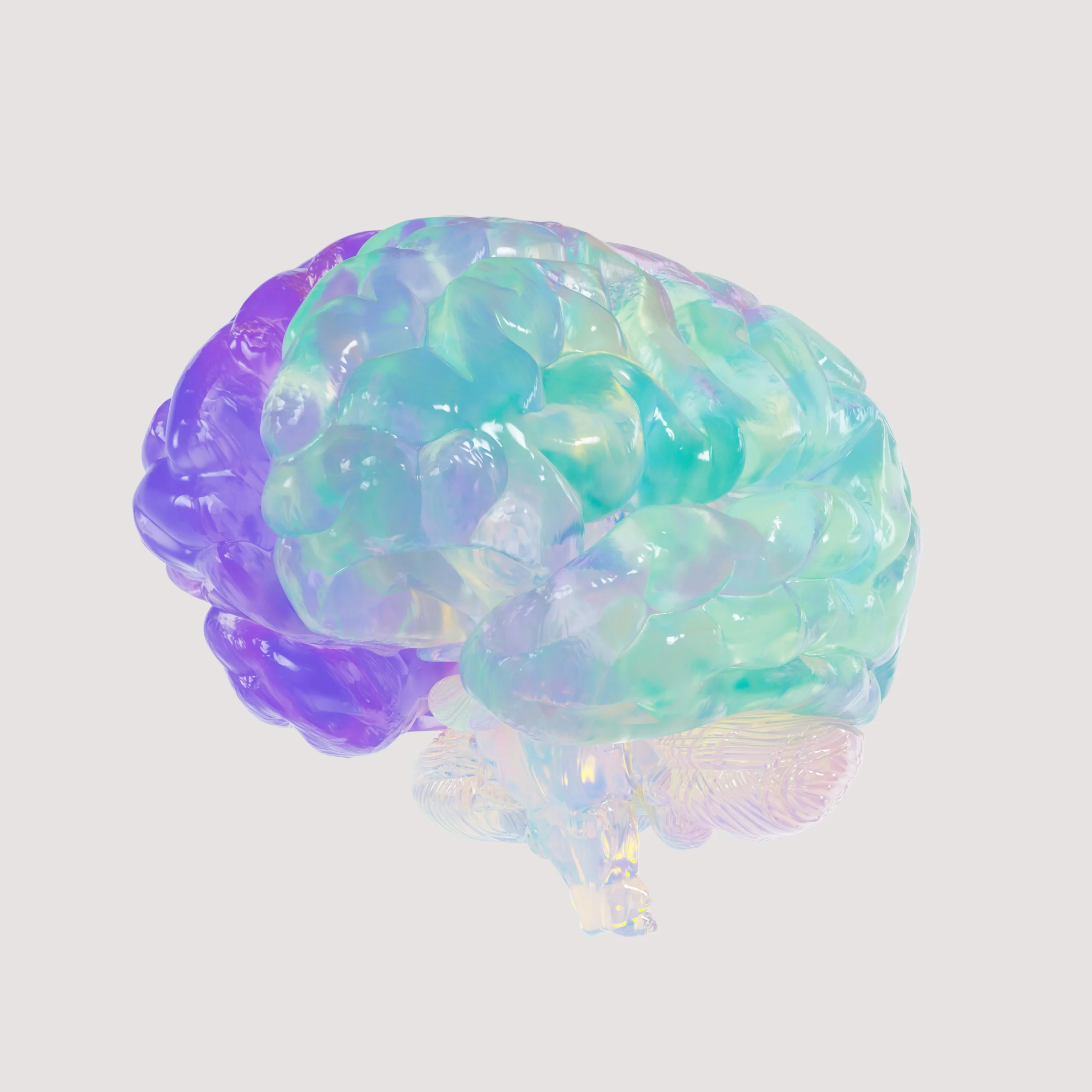
There is a question that surfaces quietly in many lives — sometimes in a therapist’s office after years of work that has helped but not quite reached something, sometimes in the stillness of 3am, sometimes in the voice of a trusted friend who has tried everything and still finds themselves circling the same terrain.
Can the brain actually change?
Not in the motivational-poster sense. Not as metaphor. But literally, biologically — at the level of cells, connections, and chemistry.
What “neuroplasticity” actually means
The brain is not a fixed machine. It is a living structure that rewires itself throughout life in response to experience, learning, stress, and relationship. This capacity for structural and functional change is called neuroplasticity, and it happens at several levels simultaneously.
At the molecular level, it involves changes in the activity of specific genes and proteins — the chemical instructions that govern how neurons communicate. At the cellular level, it involves the birth of new neurons (neurogenesis), the growth of branching extensions on existing neurons (dendritogenesis), and the strengthening or weakening of the connections between them (synaptogenesis). All of these processes are interconnected and constantly active, but some conditions accelerate them, and others suppress them.
One of the most important regulators of neuroplasticity is a protein called BDNF — Brain-Derived Neurotrophic Factor. Think of it as a kind of fertiliser for neurons: it supports their growth, their survival, and their ability to form new connections. Studies consistently show that BDNF levels are significantly reduced in people experiencing anxiety, depression, and addiction, and that treatments which increase BDNF, including conventional antidepressants, correlate with clinical improvement.
The systematic review: what researchers set out to find
In 2021, a team from the Department of Neuropsychology and Psychopharmacology at Maastricht University published a systematic review examining precisely this question: do psychedelics induce neuroplasticity, and if so, through what mechanisms?
The review — de Vos CMH, Mason NL, and Kuypers KPC, Frontiers in Psychiatry, 2021 — analysed 20 experimental studies, including both laboratory (preclinical) and human (clinical) research, covering psilocybin, LSD, DMT, and ayahuasca. Their conclusion, stated with academic precision:
“Findings from the current review demonstrate that psychedelics induce molecular and cellular adaptations related to neuroplasticity and suggest those run parallel to the clinical effects of psychedelics, potentially underlying them.”
Let’s unpack what they found — and what it does, and doesn’t, mean.
What happens at the molecular level
When a psychedelic substance binds to the 5-HT2A receptor — a specific type of serotonin receptor expressed throughout the brain — it triggers a cascade of intracellular signalling. This cascade activates what are called immediate early genes (IEGs): genes that switch on rapidly and influence the structure and function of neurons.
In animal studies, a single dose of psilocybin regulated the expression of plasticity-promoting genes in both the prefrontal cortex and hippocampus within 90 minutes of administration. LSD produced comparable effects. Crucially, these are the same molecular pathways activated by conventional antidepressants, with one significant difference in timeline: where antidepressants require weeks of daily use to produce these changes, psychedelics appear to trigger them rapidly after a single dose.
This does not mean the effects are equivalent to antidepressants in their clinical outcome. But it does mean the underlying biological mechanism is coherent and deserves serious investigation.
What happens at the cellular level: BDNF and the growth of new connections
The most consistently reported finding across the studies reviewed is the effect of psychedelics on BDNF — the neurotrophic protein that supports neuronal growth and connectivity.
In laboratory cell studies, a single dose of DMT administered to cortical rat neurons increased what researchers call dendritic complexity — the branching of neuron extensions through which communication occurs. This is not a trivial finding. More branching means more potential connections. And critically, the review notes that this effect “outlasted the acute effects of the psychedelic” — meaning it persisted after the substance had cleared from the system. The brain, in other words, was not simply responding to the chemical presence of the compound. It was undergoing a structural shift.
In addition, repeated administration of DMT over 21 days directly stimulated neurogenesis — the birth of new neurons — in the hippocampus, a brain region involved in emotion, memory, and stress regulation. BDNF mRNA levels (a measure of how actively the brain is instructing itself to produce BDNF) were elevated for up to one month after treatment cessation. Chronic LSD administration similarly stimulated plasticity-related gene expression in the prefrontal cortex four weeks after the last dose.
What the human studies show
Translating preclinical findings to human experience requires caution, and this review is careful about that. But the clinical evidence, though limited in scope, points in a coherent direction.
LSD and BDNF in healthy volunteers: A study by Hutten et al. (2020, ACS Pharmacology & Translational Science) found that low doses of LSD — 5, 10, and 20 micrograms — administered to healthy volunteers (n=24) resulted in measurably increased serum BDNF levels at 4 to 6 hours post-administration. The increase was dose-dependent: higher doses produced larger BDNF rises.
Ayahuasca and depression: A randomised controlled study by de Almeida et al. (2019, Frontiers in Psychology) found that a single dose of ayahuasca increased blood BDNF levels at 48 hours in both patients with treatment-resistant depression (n=28) and healthy controls (n=45). Critically, these elevated levels correlated negatively with scores on the MADRS depression scale — meaning that the greater the BDNF increase, the more pronounced the reduction in depressive symptoms.
Key finding at a glance: A single administration of a psychedelic produces rapid changes in plasticity mechanisms at a molecular, neuronal, synaptic, and dendritic level. These changes run parallel to — and may underlie — the clinical effects reported in both healthy volunteers and patients with mood disorders. (de Vos, Mason & Kuypers, 2021 — Frontiers in Psychiatry)
An honest word about what the research cannot yet tell us
This is where intellectual honesty matters most, because this is precisely where the conversation is most often distorted, in both directions.
The majority of the evidence reviewed by de Vos et al. comes from animal studies. Rodent and cell-line data cannot be directly translated to human experience. The clinical studies reviewed involve small sample sizes. And the authors themselves are explicit about the gaps in the existing literature:
“Long-term and repeated administration effects on molecular and cellular plasticity were not investigated in a clinical setting.”
There is no established therapeutic use of these substances in mainstream psychiatry, though several countries are advancing regulatory frameworks. The field is young, and significant questions about long-term effects, individual variability, and optimal conditions remain open.
If you have read this far, you probably already know how to hold that kind of complexity. Many people drawn to this area of inquiry are precisely those who have been frustrated by oversimplification in both directions — the dismissive and the breathless. The science here warrants neither.
Why integration may matter biologically, not just psychologically
Here is perhaps the most important practical implication of the neuroplasticity findings, and the one most consistently overlooked in popular accounts of this research.
If these substances genuinely open a window of heightened neuroplasticity — a period in which the brain is, at the molecular and cellular level, more available for change — then what happens during and after that window is not incidental. It may be structurally significant.
This is not a new idea in neuroscience. It is well established that neuroplasticity is experience-dependent: the brain changes in response to what it practises, what it attends to, what it rehearses emotionally and cognitively. A brain temporarily in a state of heightened plasticity does not automatically reorganise itself in any particular direction. It simply becomes more responsive to input.
What follows from this? That preparation and integration — the intentional structuring of what happens before, during, and after a psychedelic experience — may not simply be sound psychological practice. It may be one of the key determinants of whether the neuroplastic window translates into lasting change at the level of behaviour, habits, relationships, and self-perception.
The brain in a state of heightened plasticity does not automatically reorganise itself in a useful direction. It becomes more responsive to input. What that input is, and how it is supported, matters enormously.
This is why, at Full Circle Journeys, preparation and integration are not supporting elements to an experience. They are the place where sustainable inner work actually lives. We approach every process with this in mind, grounded in both the emerging research and in careful, compassionate facilitation practice.
A note on who this research speaks to
This article is not written to persuade you of anything, nor to push you toward any particular decision. If you are someone who has spent years navigating the weight of depression, anxiety, or patterns that feel resistant to change, you already know that biology is only part of the story. Context, relationship, timing, and the quality of support matter just as much.
What the research summarised here says, in essence, is this: there are measurable biological processes that may underlie the experiences people report in well-structured psychedelic contexts. Those processes are real. They follow knowable mechanisms. And they do not require mystical framing to be taken seriously, though what they point toward, in human terms, is still far richer than any mechanism alone can capture.
That is worth knowing. Whatever you decide to do with it.